Foundation repair
When the short foundation wall under your house cracks or a corner drops, we find the cause first, because a patch over an unsolved problem cracks again.
Mastercraft Fresno Concrete and Masonry is a Fresno masonry contractor working in Madera, CA. We repair crumbling mortar and tired chimneys on older brick homes, and build block walls, retaining walls and paver driveways that stay straight.
We're a masonry contractor based in Fresno, CA, and Madera is a straight run up Highway 99, so it's one of the cities around Fresno we work in. The calls are a mix: older brick houses whose mortar has gone soft and sandy, chimneys that need their tops rebuilt, and newer homes that want a block wall on the property line, a paver driveway or an outdoor kitchen. It's the same work our crew does in Mayfair and out in Bonadelle Ranchos.
The price on a Madera job turns on a few things: how much wall or how many joints there are, how deep the footing has to go, how easy it is to get a crew and material to the spot, and whether old work has to come out first. The schedule mostly turns on whether the job needs a permit and on giving mortar and concrete time to set before we load them. I'll walk it with you and give you the price in writing. On older brick, the job is usually about matching a softer mortar to the old brick so the brick doesn't crack around the new joints. On a new wall, it's about the footing, because a straight wall starts with what's under the first block.
Commercial work taught me a wall is won or lost before the first block goes on. The footing, the drainage and the mortar mix get the most attention, because you can't fix them later.
Our own crew does the work, with a lead mason running it on site, so the person who knows the plan is the one making the calls while it's built.
If repointing a few bad joints will hold, I'll tell you that instead of selling you a new wall. Tearing out sound brick costs you money and gains you nothing.
When the short foundation wall under your house cracks or a corner drops, we find the cause first, because a patch over an unsolved problem cracks again.
Loose bricks and open joints up top let water into a chimney, so we rebuild the cracked cap and relay only the brick that's actually failing.
After we cut out the worn mortar, tuckpointing finishes each joint with a thin raised line in a contrasting color, the crisp look a lot of older brick started with.
Bricks with cracks or flaking faces get cut out and replaced one at a time, with the closest match we can find to the brick already in the wall.
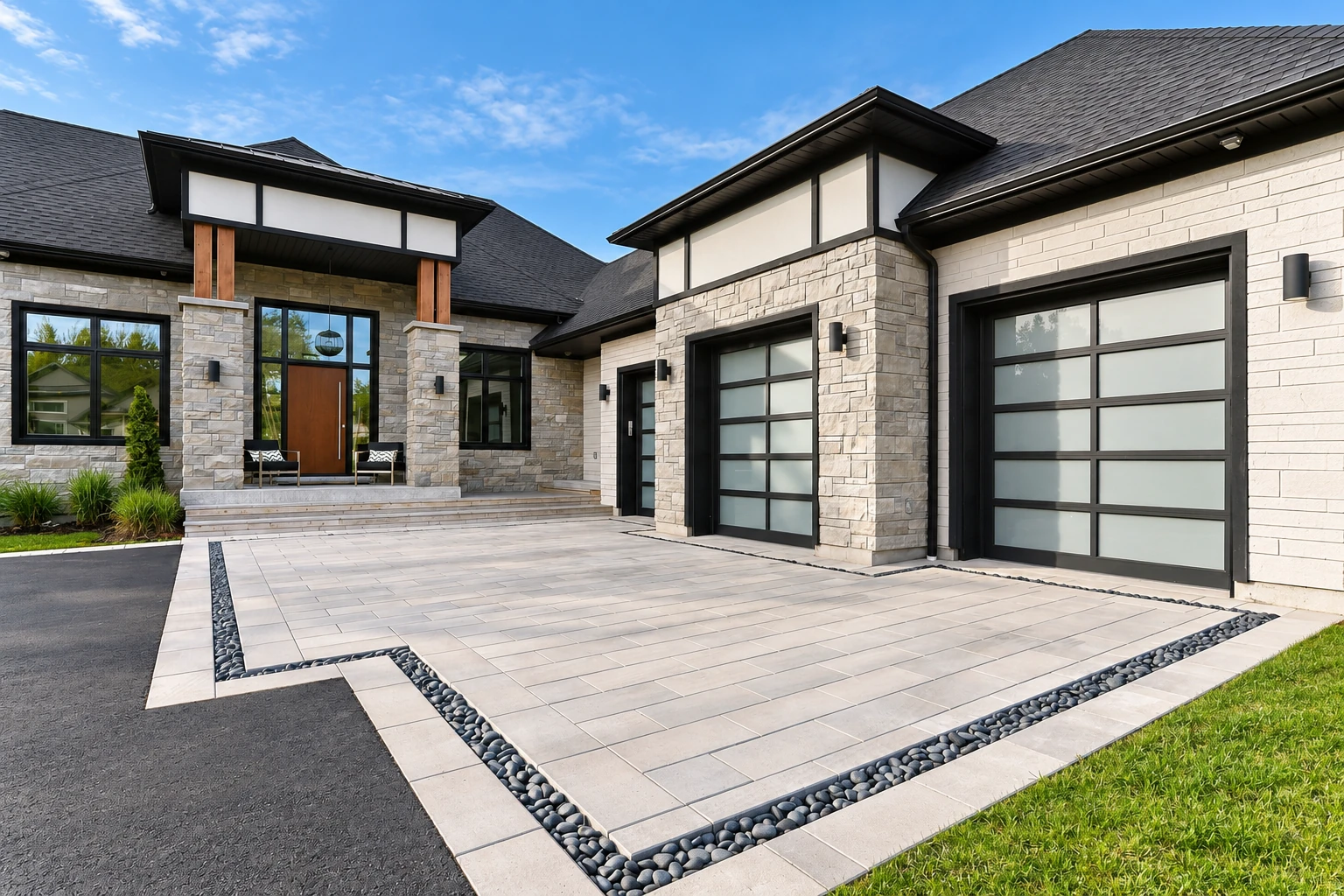
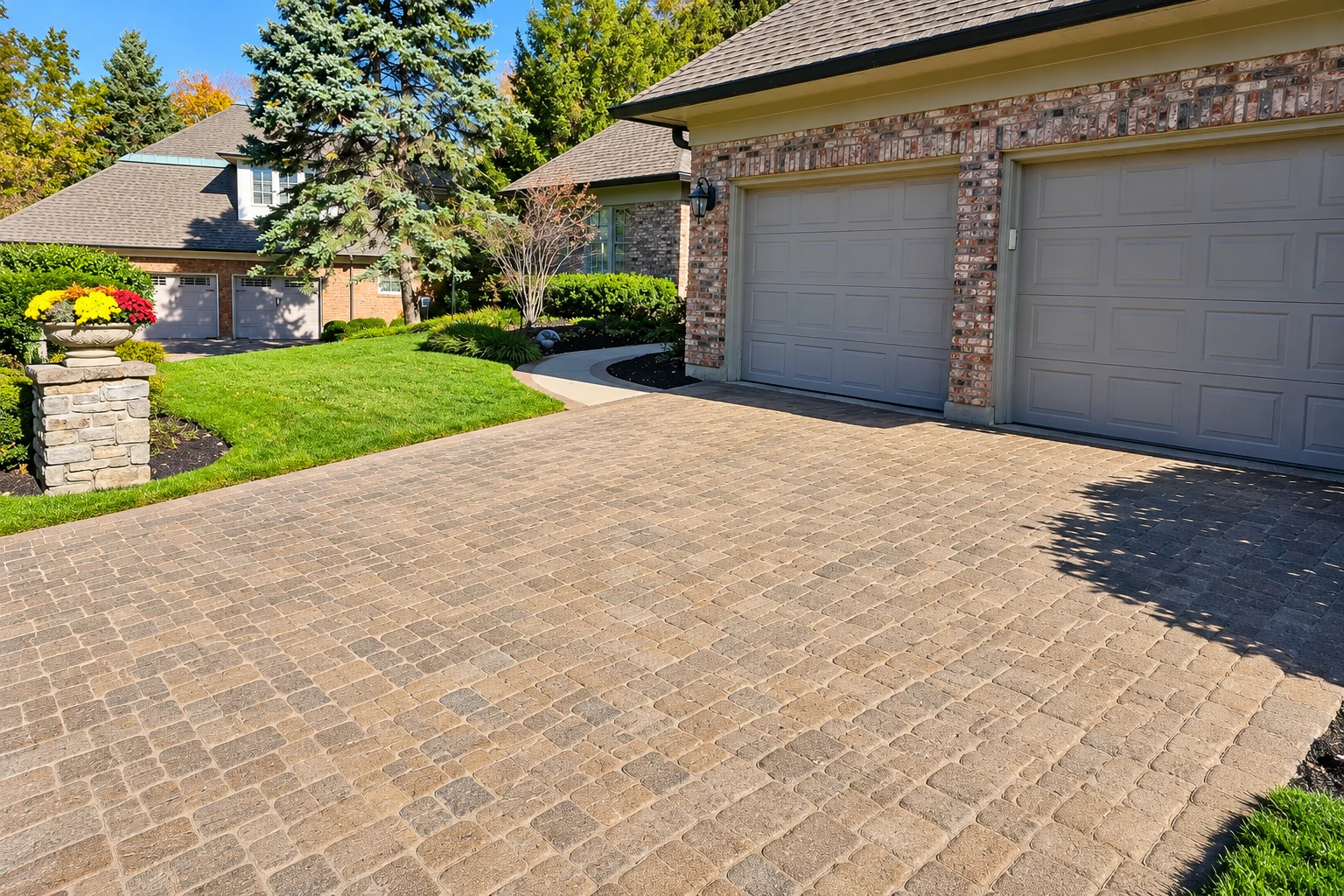
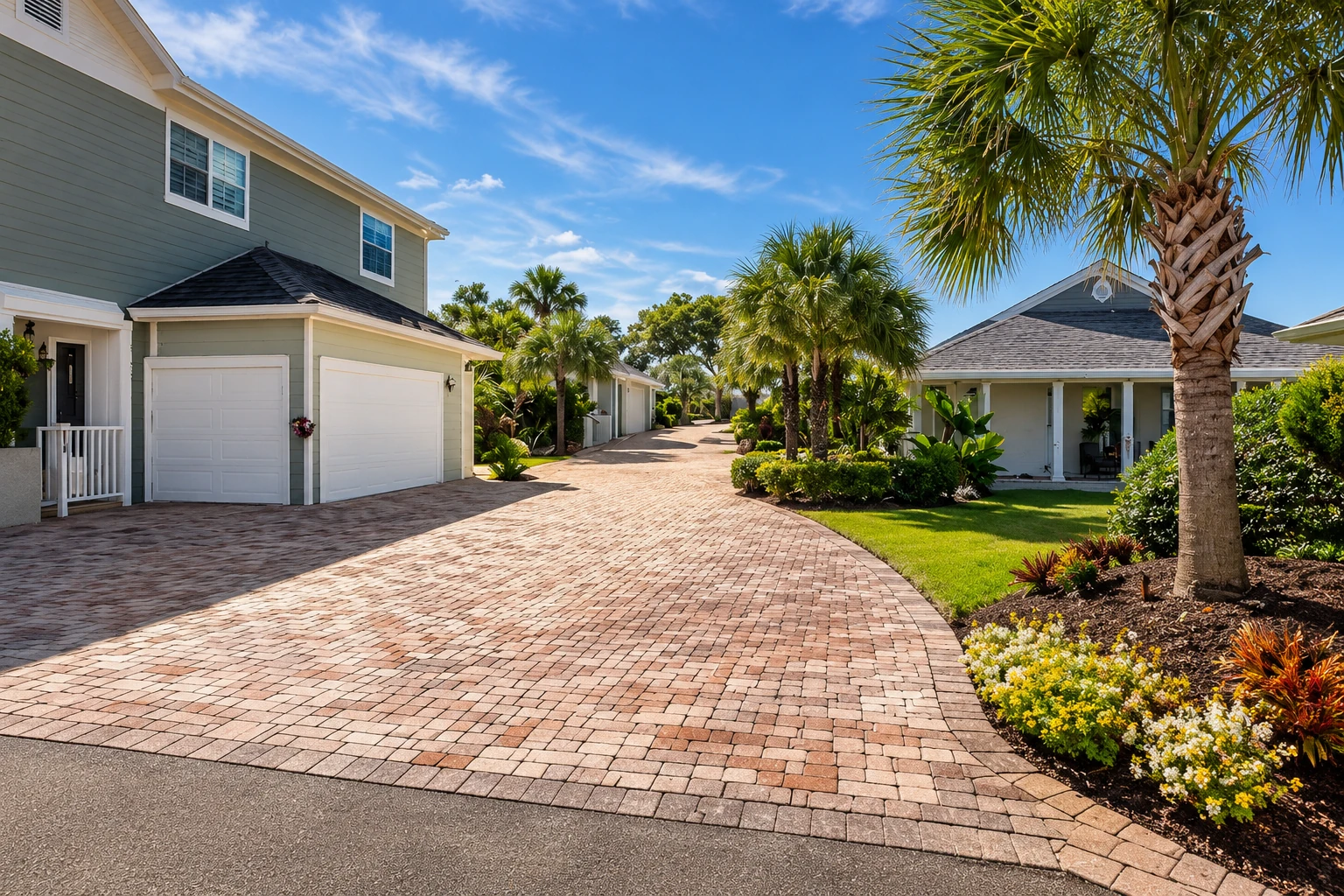
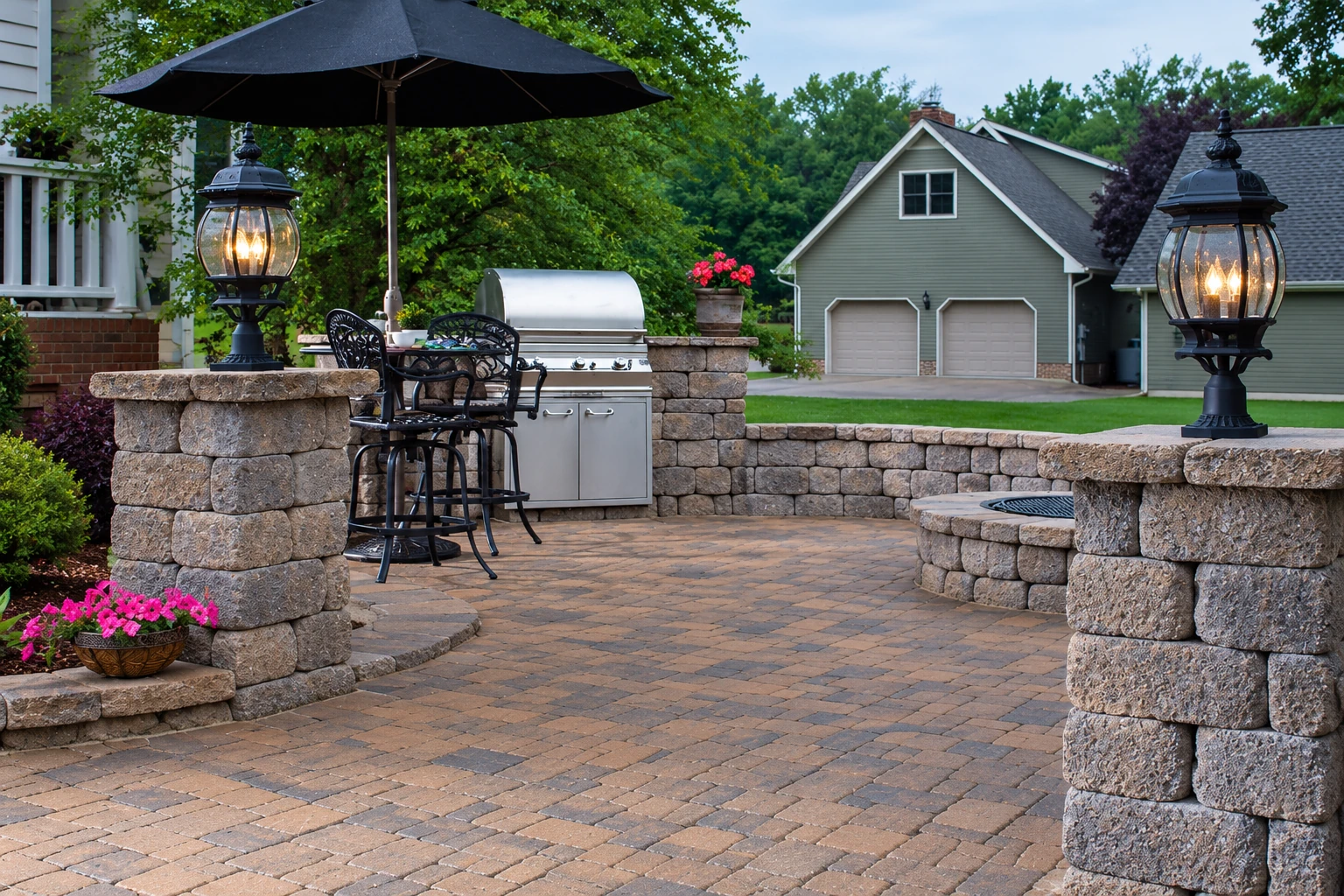
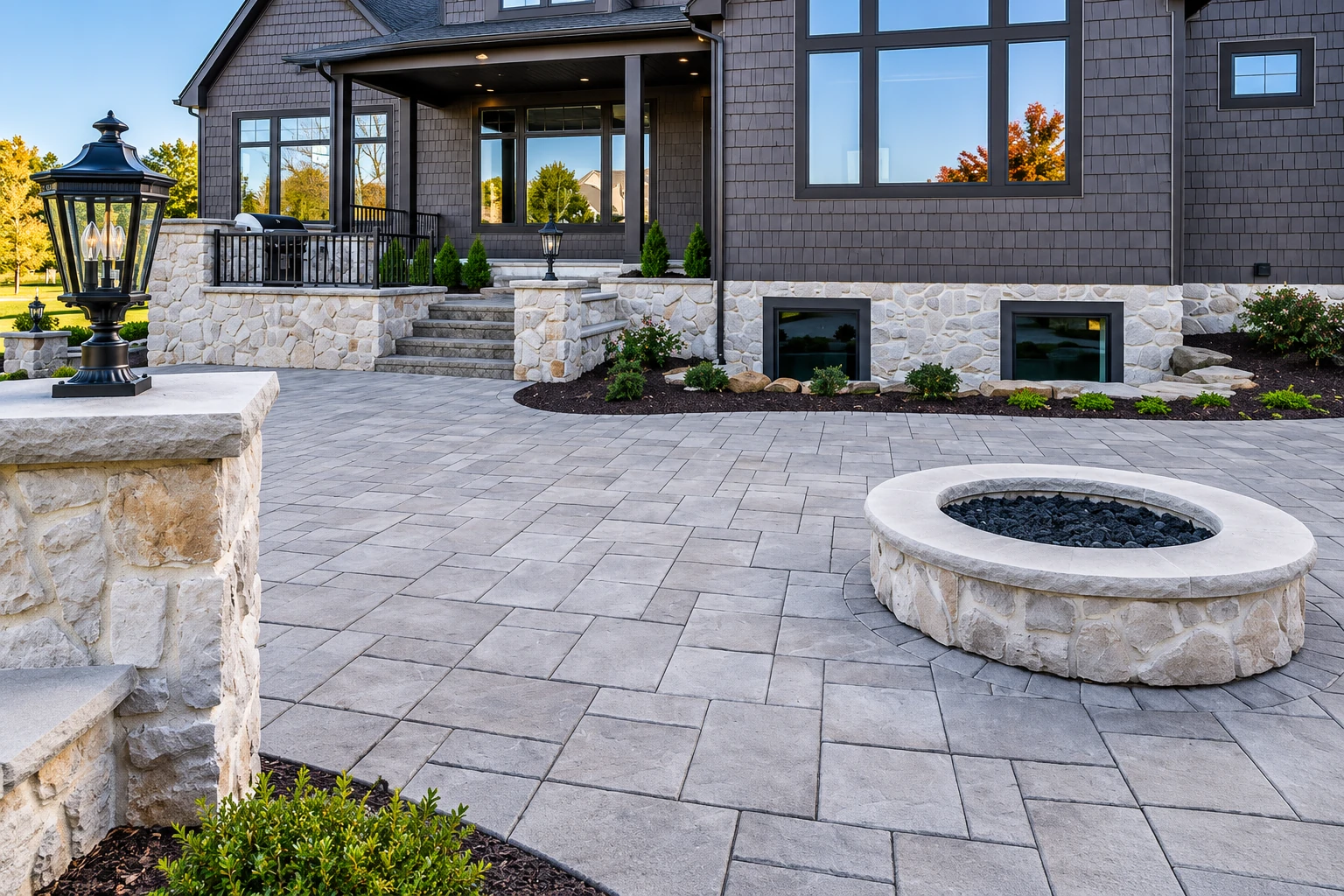
We dig out, lay and compact a gravel base before the first paver goes down, because a paver driveway settles and ruts when the base underneath is thin.
A retaining wall holding back a yard needs a solid footing and drainage behind it, so water doesn't build up and push the wall out of line.
For older brick and stone that's worn all over, we clean it, repoint it and replace the damaged pieces so the wall looks and works the way it should.
We build masonry fireplaces from the inside out, with heat-rated firebrick where the fire burns and brick or stone on the face to suit the room.
This is a thin stone face set over a wall, and we put a moisture barrier and wire lath behind it, because trapped water is what pops stones loose.
Walls along a property line go on a poured footing with steel and grout run through the hollow cores, which is what keeps a tall wall straight.
For an addition or a crawl space, we lay foundation block on a footing sized for the load, keeping every row level so the framing above sits true.
We build the base in block and face it with brick or stone, laying out the grill and utility openings first so we're not cutting into finished work.
We set walkways in brick, pavers or stone on a packed base with a slight slope away from the house, so water runs off instead of puddling at the door.
Garden walls, planters and brick fences go on a real footing with mortar mixed for the job, because brick on a thin base starts to lean.
Natural stone walls, steps and columns are laid one stone at a time, fitted so the weight sits on stone and not just on mortar.
When a few joints on a brick wall or step have gone sandy, we rake them out and refill just those, which can head off a bigger repair.
Send the form and we'll get back to you within one business day to set a time. I'll come out, look at the job and give you a free written price, with no obligation.
I come out to see the job and write the estimate myself, so the price comes from someone who has laid block and brick for a living.
The estimate is free and the price is in writing, so you can read it over and compare it before you decide anything.
If your house is a designated historic property, mention it at the estimate. It changes how we plan the work, so it's better to know before the price is written.
A few questions Madera homeowners ask before a wall, chimney or paver job, about permits and who's allowed to do the work.
If your house is inside city limits, the City of Madera's Building Department handles it. The city and Madera County are separate governments, so your address decides the office. When a job needs a permit, we file it with the right one, handle the paperwork and request inspections at least 24 hours ahead, as the city requires.
It may need one, and the city makes that call. Its list of work that may need a building permit covers new construction, additions, remodels and repairs, and its Building & Development Department gives guidance on what a project requires before it starts. Work in a public sidewalk, street or alley, like where a new driveway meets the curb, also needs an encroachment permit first.
Yes. The city says anyone who sells a product or service in Madera needs a business license from its Finance Department. Licenses renew on July 1 and run through the following June 30. It's a fair thing to ask about when you're comparing contractors.
We're based in Fresno, and these are the cities with their own page, not the only places we work. If yours isn't listed, call or use the form to ask.
Call (559) 319-0148 or use the form to describe your project, because a loose joint or leaning wall is usually a smaller fix caught early.